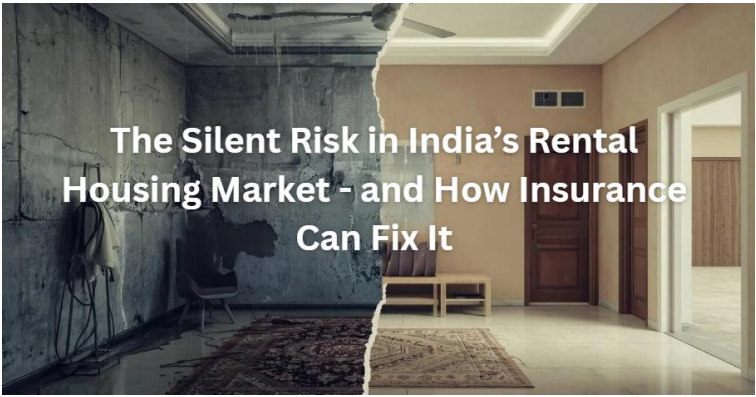
India's rental housing market is expanding rapidly, driven by urban migration, young professionals, students, and a growing preference for flexible living. Today, an estimated 30–35% of urban households in India live in rented homes, with demand concentrated in cities such as Bengaluru, Hyderabad, Mumbai, Delhi NCR, and Chennai. Yet, despite this scale, financial protection within rental housing remains limited.
Rent and tenant insurance addresses this gap by protecting tenants' belongings and liabilities, while safeguarding landlords' rental income and property interests. As India's cities densify and climate, income, and housing shocks become more frequent, this form of insurance is becoming increasingly relevant in the context of financial resilience and inclusive growth.
Understanding Rent and Tenant Insurance
Rent and tenant insurance refers to two closely linked but distinct forms of coverage.
Tenant or renter's insurance is designed for individuals or families living in rented homes. It covers personal belongings such as furniture, electronics, and appliances, and provides liability protection if accidental damage is caused to the rented property or if a visitor is injured within the home. Some policies also cover temporary accommodation expenses if the rented house becomes uninhabitable due to an insured event.
Rent insurance, often bundled within landlord insurance, is meant for property owners. It protects against loss of rental income, major tenant-related damage, and legal expenses arising from disputes or eviction proceedings. Together, these products help distribute risk more fairly between tenants and landlords and support a more sustainable rental ecosystem.
Why This Insurance Matters in India
In India, most rental arrangements operate on informal assumptions - tenants believe landlords will absorb losses, while landlords expect tenants to manage their own risks. This mismatch frequently leads to disputes, financial stress, and delayed recovery after incidents.
The numbers highlight the protection gap. While overall insurance penetration in India remains around 3.5-4% of GDP, coverage among tenants is far lower. Market estimates suggest that less than 5% of urban renters currently hold any form of tenant or renter's insurance, despite the average urban tenant owning personal assets worth ₹3–10 lakh.
For landlords, the risk is equally tangible. Small landlords, those owning one or two properties, form the backbone of India's rental market. Even a 2–3 month rent default can disrupt household finances, particularly for retirees or middle-income families dependent on rental income stability.
What Is Typically Covered

Coverage varies by insurer, but most rent and tenant insurance policies address common risks such as fire, water damage, theft, and natural catastrophes. Tenant policies focus on personal belongings and liability, while landlord policies emphasize property damage and rental income loss. Optional add-ons may include protection for high-value items, electronics, cyber-enabled theft risks, or climate-related risks such as floods.
India-Specific Examples and Case Studies
Case Study 1 - Urban Tenant in Bengaluru
Ravi, a 28-year-old IT professional renting a one-bedroom apartment in Bengaluru, experienced a short-circuit fire that damaged his laptop, work equipment, and furniture, with losses amounting to nearly ₹2.5 lakh. The landlord's insurance covered only structural repairs. A basic tenant insurance policy, costing a few hundred rupees a month, could have covered Ravi's belongings and temporary accommodation.
Case Study 2 - Small Landlord in Hyderabad
Mrs. Anjali, a retired schoolteacher, owns a small residential property in Hyderabad and depends on rental income of around ₹18,000–20,000 per month. During the pandemic, her tenant lost employment and defaulted on rent for several months. Rent protection insurance could have partially replaced lost income and supported legal or mediation costs, easing financial pressure during an uncertain period.
Case Study 3 - Flood-Prone Rental Housing in Chennai
In low-lying areas of Chennai, seasonal flooding frequently damages household items in rented homes. During severe monsoon years, flood-related losses for tenants can range from ₹50,000 to over ₹2 lakh per household. Affordable tenant insurance with flood add-ons can help renters recover faster, reduce disputes, and support climate resilience.
How Many Renters Are Insured in India?

Despite the scale of India's rental housing market, tenant and rent insurance adoption remains nascent. Industry estimates indicate that fewer than 10 million tenant or renter insurance policies were active in India in 2020. Over the past five years, adoption has grown steadily but from a very low base.
By 2024, the number of renter or tenant insurance policies in India is estimated at around 16 million, reflecting gradual awareness, digital distribution, embedded insurance models, and platform partnerships. This implies an average annual growth rate of 8–10% over the past five years, still modest when compared to the size of the rental population.
Looking ahead, market research projects that India could see 25 million renter insurance policies by 2028 and 40 million by 2034, driven by urbanisation, climate risk, embedded insurance, rising asset ownership, and regulatory nudges. These figures underscore both the progress made and the vast untapped potential that remains.
The Role of Digital and Embedded Insurance in India
India now has over 900 million internet users and a rapidly growing base of digital-first renters. PropTech platforms, co-living operators, and rental management apps are increasingly exploring embedded insurance models, where tenant or rent insurance is bundled directly into rental agreements.
Monthly premium payments aligned with rent cycles, app-based claims processes, and API-led insurance integrations are making insurance more accessible and relevant, particularly for young renters and small landlords.
Conclusion
Rent and tenant insurance is no longer optional in India's evolving housing ecosystem. It reduces financial shocks, limits disputes, and builds trust between tenants and landlords. While adoption has increased over the past five years, coverage remains low relative to the size of the rental market.
As awareness grows and digital distribution expands, rent and tenant insurance can become a standard feature of rental living, supporting financial resilience, inclusion, and sustainable urban housing across India.
References
- Insurance Regulatory and Development Authority of India (IRDAI) - Insurance penetration data - https://www.irdai.gov.in
- Ministry of Housing and Urban Affairs - Model Tenancy Act, 2021 - https://mohua.gov.in
- Allied Market Research - Global Renters Insurance Market, India as emerging market - https://www.alliedmarketresearch.com
- Policybazaar - Overview of renter and tenant insurance products in India - https://www.policybazaar.com
- National Disaster Management Authority (NDMA) - Urban flooding and climate risk - https://www.ndma.gov.in
About MicroInsurance Innovation Hub Foundation
The MicroInsurance Innovation Hub (MIIH) Foundation aims to revolutionize the microinsurance segment, especially in India and the Asia Pacific region. Based in Hyderabad, it focuses on developing inclusive insurance solutions tailored to underserved populations. By exploring product, technological, and process requirements, the Hub supports companies in penetrating this market segment. With a mission to serve the underprivileged, it strives to enhance insurance penetration and foster inclusive growth.
The Hub works to support the development of microinsurance in the Indian insurance industry by exploring various aspects of this business, the product range, technological requirements, process requirements, and the type of people required to enhance penetration. For more information, write to us at contact@microinsuranceinnovation.com.
CTA
At the MicroInsurance Innovation Hub Foundation, we work closely with associates to design and promote innovative, scalable, and embedded risk solutions. Reach out to us to learn how microinsurance can protect your business and customers. Write to us at contact@microinsuranceinnovation.com and explore more at www.microinsuranceinnovation.com.
Disclaimer
The MicroInsurance Innovation Hub (MIIH) Foundation is a Section 8 company and has members who intend to foster financial inclusion of underserved and unserved communities through insurance. The Hub acts as an open platform for microinsurance stakeholders. This Hub works exclusively in the microinsurance and inclusive insurance space in India and other regions. The information provided here is gathered from various sources and MIIH does not validate any data. The information is intended solely for internal discussion purposes.