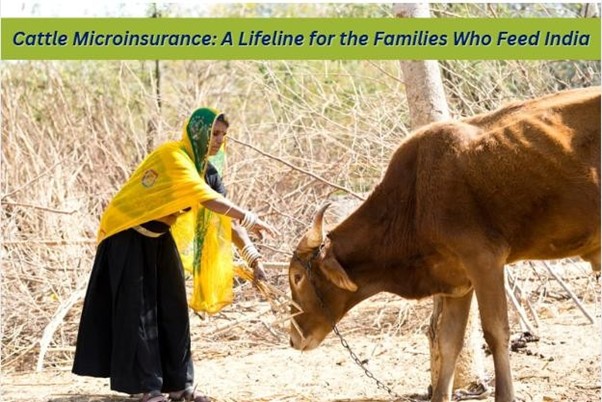
In many rural households, cattle are not just a animal-they are the backbone of the family’s financial survival. Take, for example, the Rao family living in rural Telangana. Every morning before sunrise, the family begins their day around Radha, their dairy cow. The daily milk sale provides a steady income that pays for their children’s school fees, monthly groceries, and unexpected household expenses. In a household without formal savings or fixed salaries, Radha functions as their most asset.
But during the last monsoon, Radha suddenly suffered from a severe fever. Despite the local veterinarian’s best efforts, she passed away within two days.
-
The impact for the Rao family was immediate and far-reaching:
- Their only source of regular income disappeared overnight.
- To purchase another cow, they were forced to borrow ₹40,000 from an informal lender, at a very high interest rate.
- Their daughter’s school fees had to be deferred because there was no money left.
- Whatever small savings they had were wiped out.
What happened to the Rao family is not an isolated incident. Thousands of low-income households across India face similar losses every year because they do not have cattle insurance. Many only understand the importance of protection after a disaster hits-when it’s already too late.
Why Cattle Microinsurance Matters - The Hidden Crisis Behind India’s Livestock Economy
India has one of the world’s largest livestock populations, with nearly 300 million bovines. Livestock contributes about 4.3% to the country’s GDP, and dairy alone generates nearly ₹5 lakh crore annually, supporting over 70 million rural households with daily income. A good milch cow can cost anywhere between ₹35,000 and ₹70,000 depending on the breed. Yet despite this immense economic and livelihood dependence, most animals remain uninsured - exposing millions of families to financial shocks they simply cannot absorb.
The Coverage Gap
A study by the National Insurance Academy reveals the depth of the problem:
- Only about 6% of India’s cattle are insured.
- Less than 0.6% of cattle owners actually use livestock insurance.
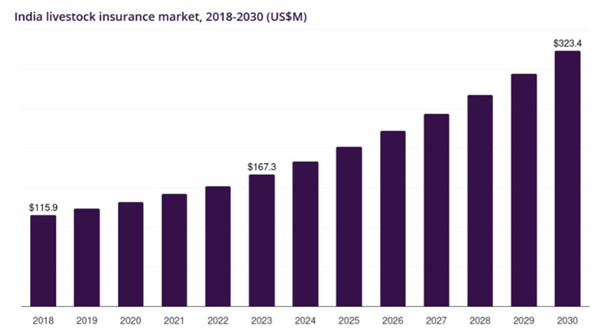
Livestock insurance penetration is just 0.98% across India. This means 94% of cattle, and the families who depend on them, remain unprotected. One sudden illness or accident can push an entire family into long-term debt.
Rising Cattle Losses in India
In recent years, cattle deaths have sharply increased due to disease outbreaks and climate-related risks.
- In 2022, the Lumpy Skin Disease (LSD) outbreak killed 155,366 cattle across India, devastating dairy communities.
- In Maharashtra alone, more than 8,400 cattle died from LSD that same year.
- Hemorrhagic Septicaemia (HS), another deadly disease, is estimated to cause economic losses of up to ₹11,904 per animal.
- India records over 62 lakh cattle deaths every year due to disease, accidents, and natural causes.
- 1 unexpected cattle death wipes out 2–4 months of rural income for low-income households.
- 25–30% of low-income families fall into debt after losing a cow or buffalo (RBI rural distress report).
- Less than 1 in 200 cattle owners proactively buy insurance unless mandated by a loan.
Extreme heat, floods, and vector-borne diseases are rising due to climate change, making future losses even more severe unless families have financial protection.
What Does Cattle Microinsurance Actually Cover?
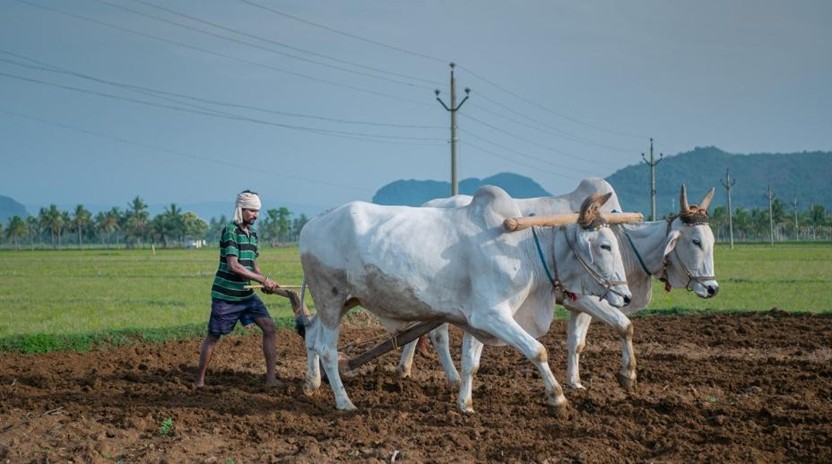
Cattle microinsurance is specifically designed to protect low-income farmers from unpredictable shocks. Unlike conventional insurance, it is affordable, simple, and structured for rural needs.
Here’s what it typically includes:
- Death due to disease
- This covers both common and severe diseases, including major epidemics
such as Foot and Mouth Disease (FMD), Lumpy Skin Disease (LSD), and
Hemorrhagic Septicaemia. These diseases can spread quickly in rural
areas where veterinary services are limited.
- Accidental death
- This includes road accidents, snake bites, poisoning, drowning during
floods, falls, or any mishap during daily grazing. Such accidents are
common because many families let cattle roam freely.
- Natural calamities
- Depending on the policy, families are protected against losses from
floods, cyclones, lightning strikes, landslides, and drought-related
impacts.
- Permanent disability
-
Not all incidents lead to death. Sometimes cattle become partially
disabled—unable to produce milk or perform work. Insurance helps
compensate for this loss of productivity.
- Calving-related complications
- Dairy cattle risks often peak during calving. Insurance covers mortality
resulting from birthing complications.
- Optional Add-ons
Some advanced microinsurance models offer:- Free or subsidized veterinary check-ups
- Vaccination support
- RFID tagging or ear-tag identification
- Digital claim submissions through mobile apps
These help families maintain cattle health and reduce disease risk.
How Cattle Microinsurance Protects Low-Income Families

1. Prevents Income Collapse
A single cow can generate ₹8,000–₹12,000 per month in milk income. For families with no alternative livelihood, losing that animal instantly collapses the household economy. Insurance ensures they receive compensation to replace the animal and restore their income quickly.
2. Reduces Debt Burden
Without insurance, families borrow heavily-often from informal lenders at 24%–48% annual interest. This creates a debt spiral that may take years to repay. Insurance prevents families from falling into long-term poverty traps.
3. Protects Women’s Livelihoods
Women play a central role in dairy farming in India, managing feeding, cleaning, milking, and selling. When a cow dies, women lose both income and self-reliance. Insurance safeguards the economic role of women in rural households.
4. Builds Confidence to Invest in Better Cattle and Care
When risks are covered, families feel more confident investing in better breeds, nutrition, fodder, and veterinary services-improving productivity over time.
5. Strengthens National Food Security
India’s dairy economy supports millions of households. By protecting cattle, insurance ensures stable milk supply, which is essential for nutrition and economic stability at a national scale.
Conclusion: One Simple Protection Can Change a Family’s Future
Cattle microinsurance is not just another financial product-it is a lifeline for India’s rural economy. For families like the Rao’s, it means the difference between resilience and crisis. It helps ensure that a single unfortunate event does not push them deeper into poverty.
As India expands its financial inclusion ecosystem, cattle microinsurance must become a key
part of rural development.
Every insured animal protects a family.
Every protected family strengthens a village.
And stronger villages lead to a more resilient India.
Reference:
- livestock-insurance-knowledge-paper-nia-pune.pdf
- Lumpy Skin Disease Caused Over 1.5 Lakh Cattle Deaths In 2022, Rajasthan Accounted For Nearly Half | Outlook India
- Lumpy Skin Disease: Lumpy Skin Disease: 8,400 cattle dead in Maharashtra, mortality rate up | Pune News - Times of India
- Economic losses due to hemorrhagic septicaemia in India | The Indian Journal of Animal Sciences
- Adopting Livestock Insurance in India: Challenges and Opportunities - SSSIHL CADS
About MicroInsurance Innovation Hub Foundation
The MicroInsurance Innovation Hub (MIIH) Foundation aims to revolutionize the Microinsurance segment, especially in India and the Asia Pacific region. Based in Hyderabad, it focuses on developing inclusive insurance solutions tailored to underserved populations. By exploring product, technological, and process requirements, the hub supports interested companies in penetrating this market segment. With a mission to serve the underprivileged, it strives to enhance insurance penetration and foster inclusive growth.
The Hub would work to support the development of micro insurance in the Indian insurance industry through exploring various aspects of this business, the product range, the technological requirements, the process requirements, and the type of people required to enhance penetration. For more information write us at contact@microinsuranceinnovation.com
CTA
At the Microinsurance Innovation Hub Foundation, we work closely with associates to design and promote such innovative risk solutions. Reach out to us to learn how microinsurance can protect your business.
Write to us at contact@microinsuranceinnovation.com and explore more at www.microinsuranceinnovation.com
Disclaimer
The Microinsurance Innovation Hub (MIIH) Foundation is a Section 8 company and has members who intend to foster financial inclusion of underserved and unserved communities through providing Insurance. The innovation hub will act as an open platform to the stakeholders of microinsurance. This Hub will exclusively work in the Microinsurance / Inclusive Insurance space in India and other regions. The information provided here is gathered from various sources and Microinsurance Innovation Hub doesn’t validate any data. The information here are intended solely for internal discussion purposes.