Introduction
India is a nation powered by its vibrant MSMEs ecosystem of over 60 million small businesses that form the backbone of our economy. These enterprises are not just local vendors; they are crucial exporters, shipping goods and services worth lakhs of crores of rupees every year. The statistics indicate that MSME sector accounts for approximately 48% of exports and 30% of GDP in India.
Yet, operating in this competitive landscape comes with a fundamental vulnerability as these small businesses often only receive payment after the delivery of goods and services. These incoming payments are the lifeblood of any MSME. They cover the cost of raw materials, production, salaries, transportation, and ultimately, determine the very viability of the entire business.
However, a dangerous situation arises when these crucial payments are delayed or defaulted on entirely. Imagine this: You’ve just delivered a large order to a seemingly trustworthy client. The invoice is sent, the payment date passes, and then you hear the news that the client has declared bankruptcy. Your lakhs of rupees are now stuck, threatening your ability to pay salaries and purchase next month's raw materials. This isn't a rare nightmare; it's a systemic risk.
Why MSMEs Are Financially Vulnerable
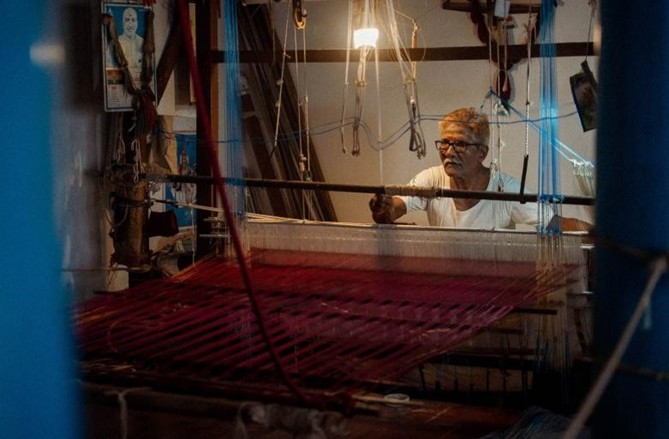
The problem of bad debt is not just an inconvenience; it's an existential threat. The statistics paint a worrying picture. As per the Government of India’s MSME SAMADHAAN- delayed payment monitoring system portal more than 2.5 lakh complaints have been registered from MSMEs related to delayed payments from buyers. Further, as of 2023, the Economic Survey of India reported that approximately ₹10.7 lakh crore was tied up in unpaid invoices. This significant sum represents a substantial amount of working capital effectively locked away, impacting businesses, particularly MSMEs, by hindering their ability to manage cash flow and reinvest in their operations.
One bad debt can trigger a domino effect: stalled production, inability to pay suppliers, loss of creditworthiness with banks, and in the worst cases, shutting down operations.
The Lifeline: What Exactly is Credit Trade Insurance?
So, how can you protect your business from this pervasive risk? The answer is Credit Trade Insurance (also known as Trade Credit Insurance).
In simple terms, it's a risk management tool that acts as a shield for your accounts receivable. You pay a small premium to an insurance company. In return, they protect your business against losses if a customer fails to pay their trade credit invoices due to reasons listed in policies such as insolvency or bankruptcy, protracted default (an extended delay in payment, typically defined as 90-180 days) etc.
Beyond a Safety Net: The Multifaceted Benefits for MSMEs

While protection from bad debt is the primary goal, the benefits of credit insurance are far more strategic:
2. Empower Sales with Confidence: With the safety net of insurance, you can confidently extend credit to new customers, take on larger orders, and enter new, riskier markets without fear. It becomes a tool for competitive aggression and growth.
3. Improve Cash Flow Forecasting: By mitigating the risk of sudden, large losses, you can predict your cash flow with far greater accuracy. This is crucial for strategic planning, investment, and sustainable growth.
How to Get Started: A Practical Checklist
1. Assess Your Risk: Analyse your customer list. Who are your top 10 debtors? What is the total value of your receivables? Understanding your exposure is the first step.
2. Research Providers: Look at providers like ECGC (a government of India enterprise specializing in export credit but also offering domestic covers, and other general insurers offering trade credit products.
3. Understand the Policy: Scrutinize the coverage limits, deductibles (the portion of the loss you bear), policy exclusions, and the process for declaring buyers and submitting claims.
4. Consult an Expert: Talk to an insurance broker or your financial advisor who understands the MSME landscape. They can help you navigate the options and find the best fit for your business size and industry.
Conclusion: From Surviving to Thriving
For an Indian MSME, protecting receivables isn't a luxury rather it's a strategic necessity for survival and scaling up. Credit Insurance transforms your risky trade credit into a secure, bankable asset. It’s the shield that allows you to focus on what you do best: growing your business, not chasing down debts.
Don't let the fear of bad debt dictate your growth strategy. Re-evaluate your risk management today and explore how credit insurance can secure your business's future.
Reference:
samadhaan.msme.gov.in/MyMsme/MSEFC/MSEFC_Welcome.aspxhttps://www.indiabudget.gov.in/budget2024-25/economicsurvey/doc/echapter.pdf
About MicroInsurance Innovation Hub Foundation
The MicroInsurance Innovation Hub (MIIH) Foundation aims to revolutionize the Microinsurance segment, especially in India and the Asia Pacific region. Based in Hyderabad, it focuses on developing inclusive insurance solutions tailored to underserved populations. By exploring product, technological, and process requirements, the hub supports interested companies in penetrating this market segment. With a mission to serve the underprivileged, it strives to enhance insurance penetration and foster inclusive growth.
The Hub would work to support the development of micro insurance in the Indian insurance industry through exploring various aspects of this business, the product range, the technological requirements, the process requirements, and the type of people required to enhance penetration. For more information write us at contact@microinsuranceinnovation.com
CTA
At the Microinsurance Innovation Hub Foundation, we work closely with associates to design and promote such innovative risk solutions. Reach out to us to learn how microinsurance can protect your business.
Write to us at contact@microinsuranceinnovation.com and explore more at www.microinsuranceinnovation.com
Disclaimer
The Microinsurance Innovation Hub (MIIH) Foundation is a Section 8 company and has members who intend to foster financial inclusion of underserved and unserved communities through providing Insurance. The innovation hub will act as an open platform to the stakeholders of microinsurance. This Hub will exclusively work in the Microinsurance / Inclusive Insurance space in India and other regions. The information provided here is gathered from various sources and Microinsurance Innovation Hub doesn’t validate any data. The information here are intended solely for internal discussion purposes.